Car insurance is one of the largest recurring expenses for many American drivers, but the price can vary substantially depending on where you live, your driving history, vehicle, age, coverage choices, and insurance company. Comparing multiple car insurance quotes can help drivers find coverage that fits their budget without giving up important financial protection.

Understanding how auto insurance works is especially important because the cheapest policy is not always the best option. A policy with a low premium may come with lower liability limits, a high deductible, or limited protection after an accident. Drivers should compare both price and coverage before choosing an insurance provider.

What Is Car Insurance?

Car insurance is a contract between you and an insurance company that provides financial protection against certain losses involving your vehicle. Depending on the policy, coverage may help pay for injuries, property damage, vehicle repairs, theft, or other covered losses.

Most states require drivers to carry at least a minimum amount of auto liability insurance. However, state requirements vary, and minimum coverage may not provide enough protection for every driver.

For example, liability insurance generally helps cover costs when you are legally responsible for an accident that causes injuries to another person or damage to someone else’s property. Your own vehicle may require additional coverage such as collision or comprehensive insurance.

Types of Car Insurance Coverage

Understanding the different types of coverage makes it easier to compare auto insurance policies.

Liability Insurance

Liability coverage is designed to protect you when you are responsible for an accident. It commonly includes bodily injury liability and property damage liability.

Bodily injury liability can help pay for covered medical expenses, lost wages, and other costs associated with injuries caused to another person.

Property damage liability can help pay for damage you cause to another person’s vehicle or property.

Because serious accidents can result in substantial financial claims, some drivers choose liability limits higher than their state’s legal minimum.

Collision Coverage

Collision insurance can help pay for repairs to your vehicle after a covered collision, subject to your deductible.

It can apply when your vehicle hits another car or an object, and may also cover certain single-vehicle accidents depending on the policy.

Collision coverage is particularly important for drivers with newer or more valuable vehicles. However, whether it makes financial sense for an older vehicle depends on factors such as the vehicle’s value, premium, and deductible.

Comprehensive Coverage

Comprehensive insurance generally covers certain types of damage that are not caused by a collision.

Examples can include theft, vandalism, falling objects, fire, and damage from certain weather-related events.

Comprehensive coverage also typically comes with a deductible. Choosing a higher deductible may reduce your premium, but it means you would pay more out of pocket for a covered claim.

Uninsured and Underinsured Motorist Coverage

Not every driver on the road has sufficient insurance. Uninsured motorist coverage may provide protection when you are involved in an accident with a driver who has no insurance.

Underinsured motorist coverage can help when the at-fault driver’s insurance is not enough to cover certain losses, subject to the policy terms and applicable state rules.

These coverages can be particularly valuable in areas where uninsured driving is more common.

Medical Payments or Personal Injury Protection

Depending on the state, drivers may have access to medical payments coverage or personal injury protection, often called PIP.

These coverages can help pay for certain medical expenses after an accident. PIP may also cover additional expenses such as lost income, depending on the policy and state requirements.

What Determines Your Car Insurance Rate?

There is no single national price for car insurance. Insurance companies evaluate multiple factors when determining premiums.

Driving Record

Tickets, accidents, and other driving violations can affect your insurance rate. Drivers with a clean record may qualify for lower premiums than drivers with multiple recent violations.

The impact of an accident or ticket can vary depending on the insurer, state, severity, and how much time has passed.

Location

Where you live can have a significant effect on insurance costs.

Insurers may consider factors such as accident frequency, theft rates, claims activity, population density, weather risks, and local repair costs when setting rates.

As a result, two drivers with similar vehicles and driving histories can receive very different quotes simply because they live in different areas.

Age and Driving Experience

Age and driving experience can also influence premiums. Newer drivers often face higher rates because insurers generally consider limited driving experience a higher risk.

As drivers build experience and maintain a safe driving record, their rates may become more competitive.

Vehicle Type

The vehicle you drive can affect the cost of insurance. Insurers may consider the vehicle’s value, repair costs, safety features, theft rates, performance, and historical claims experience.

A luxury vehicle or high-performance car may cost more to insure than a less expensive vehicle, although the exact difference depends on the insurer and individual circumstances.

Credit-Based Insurance Information

In states where permitted, some insurers use credit-based insurance information when evaluating risk. The rules vary significantly by state, and some jurisdictions restrict or prohibit the practice.

Consumers should check how insurance companies in their state calculate premiums.

Annual Mileage

Drivers who spend more time on the road may have greater exposure to accidents. Some insurers therefore consider annual mileage when calculating premiums.

If you work remotely or drive only occasionally, asking insurers about low-mileage programs may be worthwhile.

How to Get Cheaper Car Insurance

Drivers have several ways to potentially reduce their auto insurance costs without simply reducing important coverage.

Compare Multiple Quotes

One of the most effective strategies is comparing quotes from several insurance companies.

Different insurers can price the same driver very differently because each company uses its own underwriting models, discounts, claims data, and pricing structure.

When comparing quotes, make sure the coverage limits and deductibles are similar. A lower quote is not necessarily a better deal if it provides significantly less protection.

Ask About Discounts

Insurance companies may offer discounts for a variety of reasons.

Depending on the insurer, discounts may be available for bundling home and auto insurance, maintaining a clean driving record, having certain safety equipment, paying in full, completing approved driver education, or participating in an eligible usage-based insurance program.

Discount availability varies by state and company, so drivers should ask for a complete list of available discounts.

Consider a Higher Deductible

A higher deductible can sometimes reduce the monthly or annual premium.

However, the deductible should be an amount you could realistically afford if you need to file a claim. Saving a small amount on premiums may not be worthwhile if the deductible would create a financial problem after an accident.

Bundle Insurance Policies

Some insurers offer discounts when customers purchase multiple policies from the same company.

For example, combining auto and homeowners or renters insurance may reduce the overall cost compared with purchasing separate policies from different providers.

Review Your Coverage Regularly

Your insurance needs can change over time.

A policy that made sense several years ago may no longer be the best fit. Drivers should periodically review their liability limits, deductibles, vehicle value, mileage, and optional coverages.

Major life changes, such as moving to another state, buying a new vehicle, or adding another driver to the household, can also affect insurance costs.

How to Compare Car Insurance Companies

Price should not be the only consideration when choosing an insurance company.

Look at the coverage offered, customer service reputation, claims process, financial strength, available discounts, deductible options, and policy features.

It is also important to read the policy carefully. Exclusions, limits, deductibles, and conditions can differ between insurers.

Before switching companies, confirm that the new policy is active before cancelling the old one. A gap in coverage can create serious financial and legal problems.

Is Full Coverage Car Insurance Worth It?

The term “full coverage” is commonly used by consumers, but it does not refer to one specific standardized insurance policy.

People often use the term to describe a policy that combines liability, collision, and comprehensive coverage, sometimes with additional protection.

Whether this level of coverage is worthwhile depends on the driver’s circumstances.

Drivers financing or leasing a vehicle may be required by their lender or leasing company to maintain certain coverages. Owners of older cars may decide to reconsider collision or comprehensive insurance based on the vehicle’s value and the cost of coverage.

However, dropping coverage solely to save money can leave you responsible for substantial losses after an accident or other covered event.

Car Insurance for Teen Drivers

Adding a teenage driver to an auto insurance policy can significantly increase the household premium.

Parents may be able to reduce costs through discounts for good academic performance, approved driver education, safe-driving programs, or other programs offered by their insurer.

Teaching teenagers safe driving habits is also important. Avoiding speeding, distracted driving, and other dangerous behaviors can help reduce accident risk and potentially improve future insurance costs.

Car Insurance for High-Risk Drivers

Drivers with multiple accidents, serious violations, lapses in coverage, or other risk factors may have difficulty finding inexpensive insurance.

High-risk drivers can compare quotes from multiple insurers and ask whether the company offers programs specifically designed for drivers with challenging records.

In some states, assigned-risk or other insurance mechanisms may be available when drivers cannot obtain coverage through the standard market.

Frequently Asked Questions

How much does car insurance cost in the USA?

There is no single price that applies to every American driver. Premiums vary based on location, age, driving record, vehicle, coverage limits, deductible, mileage, and insurance company.

What is the cheapest type of car insurance?

A state-minimum liability policy is often less expensive than broader coverage, but it may provide considerably less financial protection. Drivers should compare the cost difference before deciding how much coverage they need.

How can I lower my car insurance premium?

Comparing several insurers, asking about discounts, maintaining a clean driving record, considering an appropriate deductible, and reviewing coverage regularly may help reduce costs.

Should I get comprehensive and collision coverage?

The decision depends on the vehicle’s value, financing requirements, budget, deductible, and risk tolerance. Drivers with financed or leased vehicles may have additional coverage requirements.

Can switching car insurance save money?

Yes. Insurance companies use different pricing models, so another insurer may offer a lower rate for the same driver and similar coverage. Comparing quotes periodically can help identify potential savings.

Final Thoughts

Choosing car insurance is not simply about finding the lowest monthly premium. The right policy should provide adequate financial protection while remaining affordable for your household budget.

The best approach is to compare several insurers using the same liability limits, deductibles, and optional coverages. Review available discounts, understand the exclusions and conditions, and reassess your policy whenever your driving situation changes.

For many drivers, spending a little time comparing auto insurance quotes can uncover meaningful differences in premiums and coverage. A careful comparison can help you avoid paying for unnecessary coverage while making sure you are not left financially exposed after an accident.

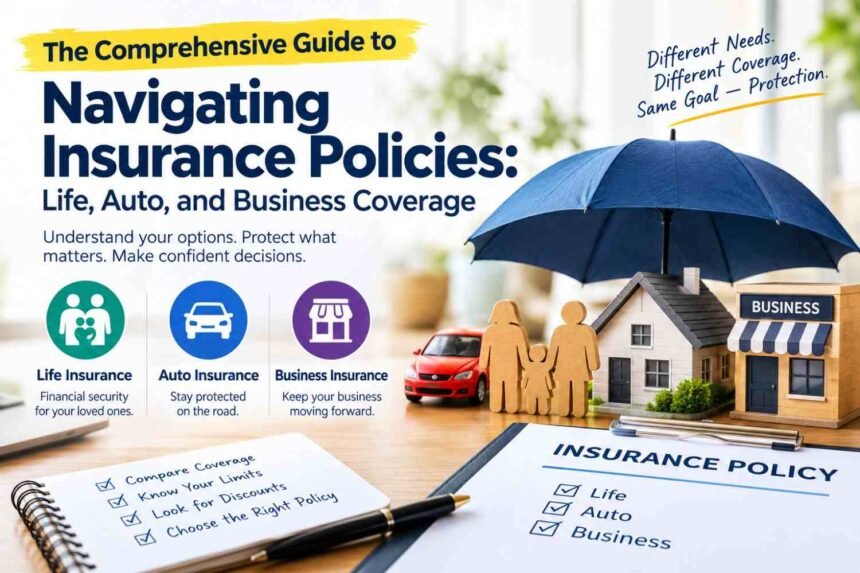
Whether you are safeguarding your family’s financial future, protecting a new vehicle, or securing your growing business, navigating the complex world of insurance is a crucial pillar of long-term financial planning. Understanding the nuances between different coverage options, premium rates, and policy limits can save you thousands of dollars while providing unparalleled peace of mind.

This guide breaks down the most critical insurance policies you need to know about, offering actionable insights to help you secure the best insurance quotes and comprehensive coverage.


1. Life Insurance: Securing Your Family’s Financial Future

Life insurance is arguably the most essential component of a robust financial portfolio. It ensures that your beneficiaries are financially protected in the event of an unexpected tragedy, covering everything from mortgage payments to college tuition.

  • Term Life Insurance: This policy provides coverage for a specific period (the “term,” usually 10, 20, or 30 years). It generally offers lower insurance premiums and higher coverage amounts, making it the most cost-effective choice for young families.
  • Whole Life Insurance: A type of permanent life insurance, whole life provides lifelong coverage and includes a cash-value savings component that grows over time. While the premiums are higher, the policy pays out a guaranteed death benefit and can act as an investment vehicle.

Pro Tip: Always compare life insurance quotes from multiple carriers. Rates can fluctuate significantly based on your age, health history, and the underwriter’s specific risk assessment models.


2. Auto Insurance: Balancing Cost and Comprehensive Coverage

Auto insurance is legally required in most jurisdictions, but settling for the minimum state requirements can leave you vulnerable to devastating out-of-pocket costs following an accident.

To fully protect your assets, consider the following coverage types:

  • Liability Insurance: Covers bodily injury and property damage that you cause to others in an accident.
  • Collision Coverage: Pays for the repair or replacement of your vehicle after an accident, regardless of who is at fault.
  • Comprehensive Coverage: Protects against non-collision-related damage, such as theft, vandalism, natural disasters, or hitting an animal.

How to Lower Auto Insurance Premiums:

  1. Bundle your auto and home insurance policies with the same provider.
  2. Maintain a clean driving record to qualify for “safe driver” discounts.
  3. Opt for a higher deductible, which significantly lowers your monthly premium (just ensure you have the cash saved to cover the deductible if an accident occurs).

3. Business Insurance: Shielding Your Enterprise

For entrepreneurs and small business owners, commercial insurance is non-negotiable. A single lawsuit or unforeseen catastrophe can easily bankrupt an uninsured business.

Key commercial insurance policies include:

Policy TypeWhat It CoversBest For
General Liability InsuranceProtects against claims of bodily injury, property damage, and personal injury (like libel or slander).All businesses, especially those with physical storefronts.
Professional Liability (E&O)Covers negligence claims or mistakes in the professional services you provide.Consultants, lawyers, accountants, and service-based businesses.
Commercial Auto InsuranceCovers vehicles used primarily for business purposes, offering higher liability limits than personal auto policies.Delivery services, contractors, and companies with vehicle fleets.
Workers’ CompensationProvides medical benefits and wage replacement to employees injured on the job.Any business with W-2 employees (legally required in most states).

4. Health Insurance: Navigating Plans and Premiums

Medical costs are a leading cause of debt, making a robust health insurance plan a critical defense mechanism for your personal finances. When evaluating health insurance plans during open enrollment, pay close attention to the HMO (Health Maintenance Organization) vs. PPO (Preferred Provider Organization) distinction.

PPOs offer more flexibility to see out-of-network specialists without a referral, whereas HMOs generally boast lower premiums and out-of-pocket costs but restrict you to a localized network of doctors.

The Bottom Line on Insurance Planning

Purchasing insurance is about transferring risk. While paying monthly premiums can feel like a financial burden, the cost of being underinsured during a crisis is exponentially higher. To maximize your financial security, audit your current policies annually, actively seek out competing insurance quotes, and consult with a licensed fiduciary or insurance broker to tailor your coverage to your unique lifestyle and assets.

Lorem ipsum dolor sit amet, consectetur adipiscing elit. Nunc imperdiet rhoncus arcu non aliquet. Sed tempor mauris a purus porttitor, ac convallis arcu venenatis. Donec lorem erat, ornare in augue at, pharetra cursus mauris. Cras commodo orci vel scelerisque convallis. Fusce sollicitudin feugiat placerat. Aenean magna massa, vehicula at efficitur ac, vestibulum non felis. Aliquam quis feugiat sapien, eu sodales mauris.

Phasellus at auctor nibh. Morbi feugiat finibus nulla, et semper ipsum sodales a. Fusce at lacus vestibulum, luctus sapien quis, dictum erat. Phasellus orci sem, pretium nec blandit sed, faucibus eget massa. Aliquam lobortis sapien augue. Nullam dignissim elit ac libero egestas egestas. Vestibulum et convallis urna, fermentum porta mauris. Nam pellentesque lectus varius, facilisis metus at, elementum augue. Pellentesque suscipit enim massa. Curabitur elementum lorem neque, non accumsan orci vulputate placerat. Vestibulum nec mauris at dui mattis blandit. Duis nec lacinia lacus. Fusce consectetur, sapien posuere lobortis maximus, velit orci ornare felis, id elementum ex ipsum at enim. Integer lacinia ipsum nec purus sodales tristique. Curabitur iaculis at nisl et commodo.

Praesent mattis purus magna, ac iaculis tellus elementum blandit. Nullam massa ante, egestas non porta consequat, sodales ac elit. Phasellus vitae erat id massa volutpat tincidunt. Sed suscipit sed dui quis efficitur. Mauris consectetur placerat urna, ac pharetra libero suscipit ut. Mauris accumsan magna pretium ante imperdiet, ac varius augue interdum. Proin id congue leo. Curabitur eu nulla risus. Phasellus a sodales leo. Donec blandit massa et egestas dapibus. Phasellus non justo mi. Mauris leo sapien, molestie a auctor non, venenatis finibus purus.

Lorem ipsum dolor sit amet, consectetur adipiscing elit. Nunc imperdiet rhoncus arcu non aliquet. Sed tempor mauris a purus porttitor, ac convallis arcu venenatis. Donec lorem erat, ornare in augue at, pharetra cursus mauris. Cras commodo orci vel scelerisque convallis. Fusce sollicitudin feugiat placerat. Aenean magna massa, vehicula at efficitur ac, vestibulum non felis. Aliquam quis feugiat sapien, eu sodales mauris.

Phasellus at auctor nibh. Morbi feugiat finibus nulla, et semper ipsum sodales a. Fusce at lacus vestibulum, luctus sapien quis, dictum erat. Phasellus orci sem, pretium nec blandit sed, faucibus eget massa. Aliquam lobortis sapien augue. Nullam dignissim elit ac libero egestas egestas. Vestibulum et convallis urna, fermentum porta mauris. Nam pellentesque lectus varius, facilisis metus at, elementum augue. Pellentesque suscipit enim massa. Curabitur elementum lorem neque, non accumsan orci vulputate placerat. Vestibulum nec mauris at dui mattis blandit. Duis nec lacinia lacus. Fusce consectetur, sapien posuere lobortis maximus, velit orci ornare felis, id elementum ex ipsum at enim. Integer lacinia ipsum nec purus sodales tristique. Curabitur iaculis at nisl et commodo.

Praesent mattis purus magna, ac iaculis tellus elementum blandit. Nullam massa ante, egestas non porta consequat, sodales ac elit. Phasellus vitae erat id massa volutpat tincidunt. Sed suscipit sed dui quis efficitur. Mauris consectetur placerat urna, ac pharetra libero suscipit ut. Mauris accumsan magna pretium ante imperdiet, ac varius augue interdum. Proin id congue leo. Curabitur eu nulla risus. Phasellus a sodales leo. Donec blandit massa et egestas dapibus. Phasellus non justo mi. Mauris leo sapien, molestie a auctor non, venenatis finibus purus.

Lorem ipsum dolor sit amet, consectetur adipiscing elit. Nunc imperdiet rhoncus arcu non aliquet. Sed tempor mauris a purus porttitor, ac convallis arcu venenatis. Donec lorem erat, ornare in augue at, pharetra cursus mauris. Cras commodo orci vel scelerisque convallis. Fusce sollicitudin feugiat placerat. Aenean magna massa, vehicula at efficitur ac, vestibulum non felis. Aliquam quis feugiat sapien, eu sodales mauris.

Phasellus at auctor nibh. Morbi feugiat finibus nulla, et semper ipsum sodales a. Fusce at lacus vestibulum, luctus sapien quis, dictum erat. Phasellus orci sem, pretium nec blandit sed, faucibus eget massa. Aliquam lobortis sapien augue. Nullam dignissim elit ac libero egestas egestas. Vestibulum et convallis urna, fermentum porta mauris. Nam pellentesque lectus varius, facilisis metus at, elementum augue. Pellentesque suscipit enim massa. Curabitur elementum lorem neque, non accumsan orci vulputate placerat. Vestibulum nec mauris at dui mattis blandit. Duis nec lacinia lacus. Fusce consectetur, sapien posuere lobortis maximus, velit orci ornare felis, id elementum ex ipsum at enim. Integer lacinia ipsum nec purus sodales tristique. Curabitur iaculis at nisl et commodo.

Praesent mattis purus magna, ac iaculis tellus elementum blandit. Nullam massa ante, egestas non porta consequat, sodales ac elit. Phasellus vitae erat id massa volutpat tincidunt. Sed suscipit sed dui quis efficitur. Mauris consectetur placerat urna, ac pharetra libero suscipit ut. Mauris accumsan magna pretium ante imperdiet, ac varius augue interdum. Proin id congue leo. Curabitur eu nulla risus. Phasellus a sodales leo. Donec blandit massa et egestas dapibus. Phasellus non justo mi. Mauris leo sapien, molestie a auctor non, venenatis finibus purus.