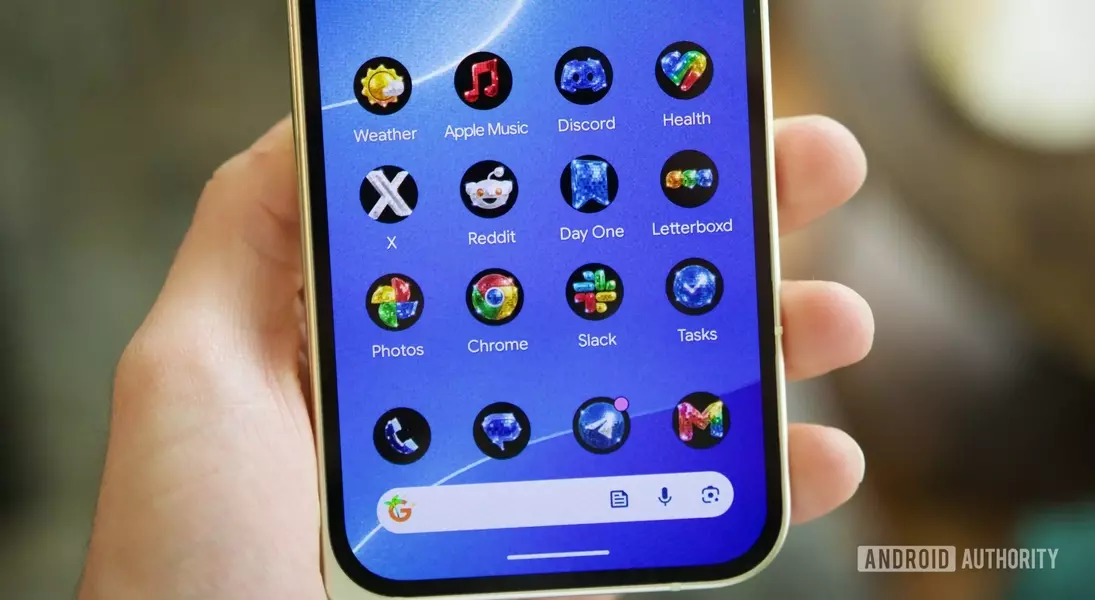
While the Pixel Launcher has made strides with recent updates, introducing welcome changes like the ability to conceal icon labels, eliminate the At A Glance widget, and integrate AI-powered icon packs for aesthetic variations, it still falls short in several key areas. These omissions prevent it from reaching its full potential, leaving users yearning for more robust customization and convenience features that are common in other Android interfaces. Addressing these gaps would significantly elevate the Pixel Launcher's standing among its competitors and cater to a broader range of user preferences.
A critical area for improvement lies in enhancing customization options, particularly concerning visual elements and screen organization. Users are eager for the Pixel Launcher to embrace full support for third-party icon packs from the Play Store, a staple of Android personalization for over a decade and a half. This feature, already available on devices from Samsung, OnePlus, and others, would provide an unparalleled level of visual tailoring beyond Google's current AI-generated offerings. Furthermore, the introduction of widget stacking would revolutionize home screen management, allowing multiple widgets to occupy the same space and be scrolled through efficiently. This innovation would enable users to consolidate information and app access, reducing clutter and the need for numerous home screens. Concurrently, expanding grid size options and implementing 'big folders' are essential for optimizing screen real estate. More flexible grid layouts would empower users to customize icon and widget placement precisely, especially beneficial on larger devices like tablets and foldables. Big folders, by contrast, offer a compact solution for smaller screens, allowing direct access to contained apps without fully opening the folder, thus maintaining a clean and functional interface.
Beyond aesthetic and organizational enhancements, the Pixel Launcher could greatly benefit from functional refinements that improve daily usability. The 'double-tap-to-sleep' function, a counterpart to the existing 'double-tap-to-wake,' is a highly requested feature that would offer a more convenient way to turn off the screen without always reaching for the power button. This small but impactful addition would streamline device interaction, particularly when a phone is on a desk or being held in an awkward position. Though individually these proposed features may seem minor, their collective implementation would profoundly transform the Pixel Launcher into a more adaptable, efficient, and user-centric platform. In an era where third-party launchers are becoming less prevalent, integrating such robust customization and convenience directly into the stock launcher is paramount for Google to meet evolving user demands and uphold Android's legacy of personalization.
Embracing these enhancements for the Pixel Launcher signifies more than just adding features; it represents a commitment to user empowerment and the rich tradition of Android's open-source philosophy. By continuously refining and expanding the capabilities of its native launcher, Google can foster an environment where technology serves individual preferences, making every interaction seamless and intuitive. This forward-thinking approach ensures that the Pixel ecosystem remains at the forefront of innovation, continually improving the daily digital lives of its users.